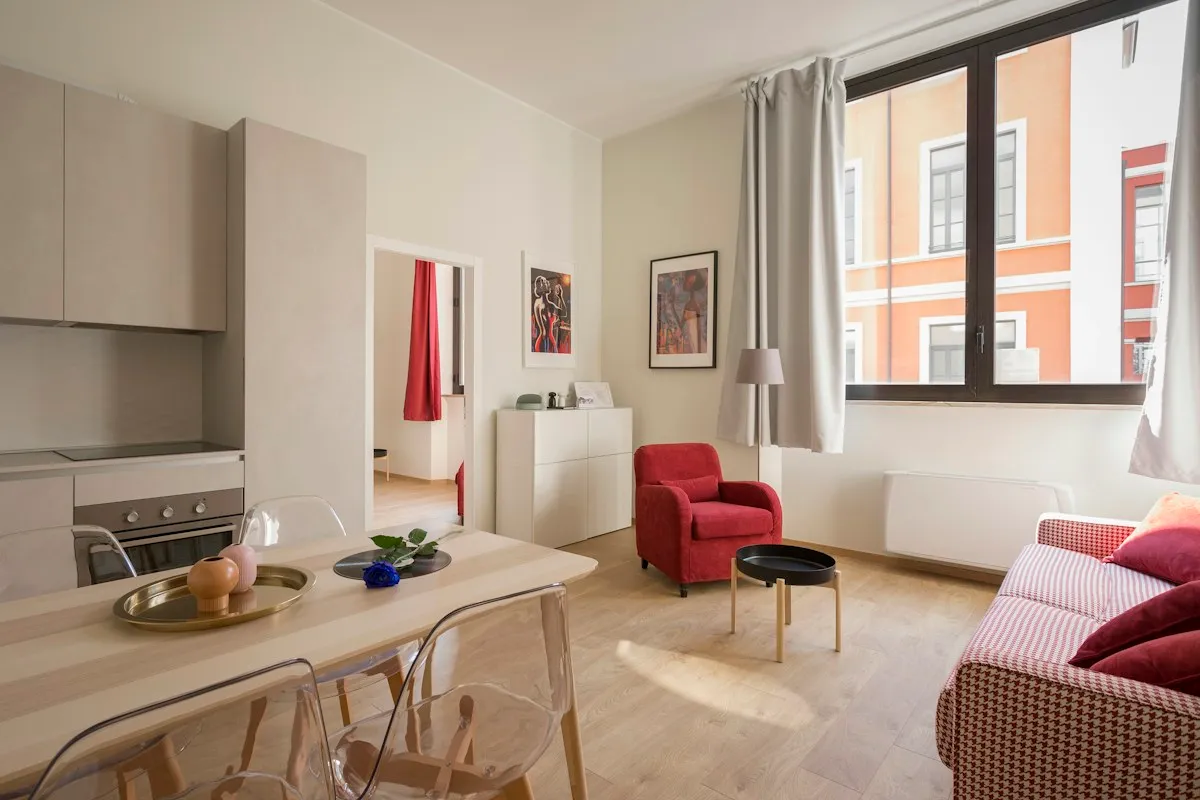
You get roughly one furniture decision per 20 square feet in a small apartment, and every one of them is either rent paid twice or rent wasted. A sofa that only seats is rent wasted. A bed that only sleeps is rent wasted. The fix is not buying less; it is demanding that every piece hold a second job, and that is exactly what the tiers below enforce, from the $80 ottoman to the $2,000 wall bed.
This is the furniture chapter of the whole-home organization system, and it follows the same rule the system always follows: the floor plan picks the furniture, and clearance zones pick the floor plan.
The double-duty master table
Nine pieces, ranked by storage return per square foot of floor rent:
| Piece | Tier | Floor cost | Second job it performs | Skip it if |
|---|---|---|---|---|
| Storage ottoman (hard lid) | 1 | ~4 sq ft | Coffee table plus 40-60 L hidden storage | Lid is soft, no hydraulic hinge |
| Nesting tables | 1 | ~3 sq ft | Three surfaces when guests come, one footprint daily | They wobble on felt pads |
| Ladder shelf | 1 | ~2 sq ft | Vertical display plus basket storage | You own no baskets yet |
| Bar cart | 1 | ~3 sq ft | Mobile bar plus kitchen overflow station | Your kitchen has no overflow need |
| Drop-leaf table | 2 | ~6 sq ft folded | Dining plus desk; folds to 12 in deep | You host more than four people |
| Platform bed with drawers | 2 | 0 extra | Replaces a full dresser | Drawers need more than 30 in of clearance |
| Futon with storage base | 2 | 0 extra | Sofa plus guest bed | It is your only bed every night |
| Sofa sleeper with chaise | 3 | ~10 sq ft | Living room plus guest room | You never host overnight guests |
| Murphy wall bed | 3-4 | ~1 sq ft closed | Returns 18-25 sq ft of daytime floor | You cannot anchor into studs |
Read the table with the 30-inch rule in mind: floor cost is only paid if the walkways survive.
Tier 1: under $150, the starter doubles
This tier proves the concept cheaply, and one piece in it usually stays for decades. The hard-lid storage ottoman is the buy of the whole guide: it seats one, trays as a coffee table, and swallows blankets, board games, or the shoe collection organized in clear stackable boxes. Buy one, not three; three ottomans are an obstacle course. The ladder shelf earns its two square feet only after you load it with baskets and folded stacks, the same vertical discipline as the closet shelf divider system. Nesting tables and bar carts are situational; if you cannot name the second job out loud, keep the money.
Tier 2: $150 to $400, where furniture starts working
This is the honest tier, the one I send most people to. The drop-leaf table is the studio essential: 6 square feet of dining when leaves are up, a 12-inch console against the wall when they are down, and your workday never touches the bed. The platform bed with drawers deletes a dresser from the floor plan entirely; out-of-season clothes live in those drawers exactly the way my winter clothing rotation describes, with the current season’s extras divided by shelf dividers in the closet above. The storage-base futon earns its spot only as a guest setup; sleeping nightly on a mechanism rated for occasional use is how you buy the same sofa twice.
Tier 3: $400 to $900, the room-changers
Two pieces live here, and both change what the apartment is. The sofa sleeper with a chaise runs a living room by day and a guest room by quarter, and it is the first piece in this guide to demand the full 36-inch opening clearance, so measure the pull-out arc before the delivery truck is booked. The honest wardrobe play at this tier is a proper closet system rather than a second dresser, which is the vertical closet build in furniture form; your floor keeps the difference.
Tier 4: $900 and up, the Murphy bed question
A wall bed is the only piece of furniture that returns an entire room. Closed, it costs about a foot of depth; open, it hands back 18 to 25 square feet that becomes a desk zone, a gym, or simply air. Buy it if you work where you sleep, which describes most studios, and buy it installed: the mechanism is only as good as the anchoring, the same studs-first rule that governs every wall storage build. The bed-with-cabinetry custom version pairs the mattress with shelving so the wall behind it carries books and clothes too; done well, it is a floating-shelf wall for the sleeping half of the apartment.
The bathroom got the same memo
Double-duty is not a living-room rule; it is the only rule the smallest room in the apartment has ever known. The vanity is bathroom furniture in a tier of its own: a cabinet version with real drawers seats your whole morning in four square feet, and it only works if the drawer interiors are laid out by sequence, which is the vanity drawer method. Above the toilet, the wall picks up storage duty that the floor refused, the same over-the-toilet layout logic that lets the rest of the room stay walkable. If your bathroom furniture passes one job and blocks the door swing, it fails the same traffic test as everything else, so run the numbers before the vanity cart arrives.
Three impulse buys to veto on sight
You will meet these in every furniture aisle, and all three fail the two-job test:
- Acrylic side tables. One job (holding a cup), no storage, and they read as clutter in a room where everything must earn its footprint. A storage ottoman at the same price does two jobs and hides forty liters.
- Poufs. Seating for exactly one flexible friend who never arrives, zero storage, and they migrate into walkways within a week. If you want a footrest, the hard-lid ottoman already passed the table.
- Console tables behind the sofa. Six inches of shelf that collects mail and dead batteries. Unless the console has drawers or a drop leaf, it is a hallway in costume.
Every veto above has a working replacement already in the master table, which is the whole point: for each job in the apartment, the two-job version usually costs the same as the one-job version, just with better marketing.
Inside the furniture: the layer nobody styles
The second job is only real if the inside is organized. Dresser drawers get divided by type, belts coiled upright in a divided insert the way the belt storage method lays them out, socks rolled, scarves filed. Ottoman interiors work best with one soft bin inside, so the whole contents lift out in a single grab instead of excavating. Sofa-bed bases and bed drawers need the front-zone discipline: daily items at the front edge, seasonal stock at the back, because a drawer you have to kneel into is a drawer that only holds things you will forget. Style the inside like it is on display, and the furniture keeps paying both salaries for years.
The traffic test, before the credit card
Coach’s rule: no piece survives placement without passing three checks. One, 30 inches of walkway remains where people actually walk. Two, 36 inches of swing room exists in front of every drawer, leaf, and door, the same clearance math as the pantry spacing blueprint. Three, the piece does not block the kitchen work triangle, which inherits its zones from the same logic as the deep cabinet layout. Furniture that fails any check goes to the wall or goes back.
Your first 30 days, in order
- Place the bed system and the table first; they own the two biggest floor commitments.
- Tape the second job inside every piece, ottoman lid included.
- Fill every compartment to capacity on day one, not “someday.”
- Audit at day 30: any compartment you never opened, any leaf you never dropped, is a double-duty claim that failed. Re-home the contents, using the declutter-before-moving method for the overflow.
- Keep what worked, and stop shopping; the death cleaning edit applies to furniture you have not bought yet, too.
The coach’s last word
Small apartments are not a furniture shortage; they are a double-job shortage. Buy the ottoman that seats and swallows, the table that dines and desks, the bed that sleeps and stores, and give every piece a 30-inch walkway to prove itself in. Do that, and the same 350 square feet behaves like 500, which is the cheapest renovation you will ever run.
One last thing, because it matters more than any tier above: furniture in a small apartment gets moved constantly. Bed drawers open with the bed scooted out, table leaves drop for game night, the ottoman migrates to wherever guests stand. Buy pieces you can move with one hand and no apology, and the two jobs stay real long after the delivery boxes are gone. Heavy is not premium here; heavy is a second job the listing forgot to mention.