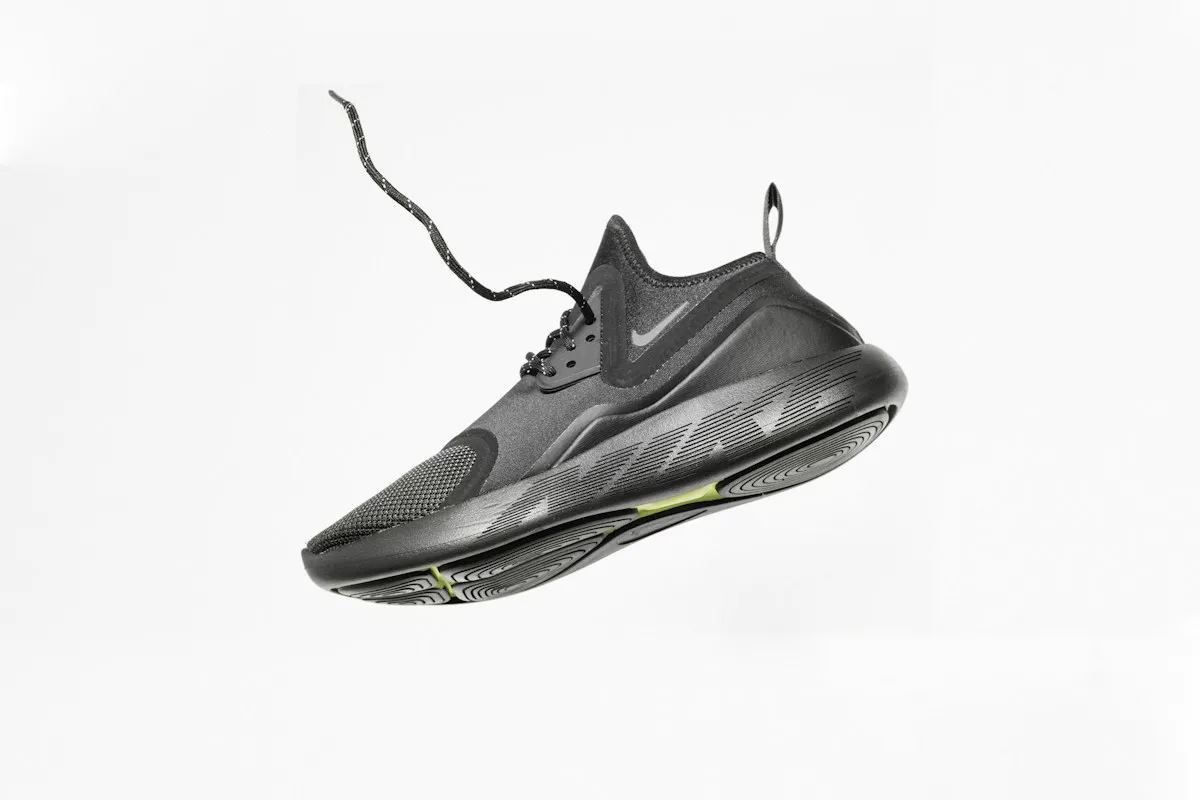
The sneaker wall looks simple: rows of clear boxes, every pair visible. Nothing toppling. Then you buy a set of cheap clear boxes, stack them, and discover why the wall in the photos never leans. The stackable design is a real engineering question, and most boxes answer it badly. After two years and four brands’ worth of boxes holding about 30 pairs, here’s what actually separates the tiers.
Measure first: the size that decides everything
Box shopping fails at the same step every time. People buy one size and discover their biggest pair doesn’t fit. Check the height of your tallest pair, because high-tops are the usual casualty:
- Standard boxes (5.5 inches tall) fit up to roughly men’s size 10, low-tops comfortably, high-tops up to 9.
- Tall boxes (7 to 8.5 inches) fit men’s 13+ and chunky high-tops without crushing the collar. If you collect Air Max-style or basketball shapes. This is your default, not the exception.
- Depth and width: 14.5 by 10.5 inches is the near-universal sneaker footprint. Anything smaller forces toes to bend, which creases the toebox the box was supposed to protect.
One wrinkle worth knowing: boxes are sold inside-out or nested, and the size on the listing is the outer dimension. An 8.5-inch-tall box is often closer to 7.5 usable once the lid channel is in.
What makes a design actually stackable
“Stackable” on the label means almost nothing. The features that mean it:
- Interlocking lid channels. The lid top has molded grooves; the base’s feet seat into them. This is what keeps a 10-box tower from creeping sideways every time you pull one.
- Side clips. Small pins that lock box to box. Better than channels for stacks you move, worse for quick access, because clips add 10 seconds per opening.
- Reinforced corners. Cheap boxes crack at the corners first, and one cracked corner in a stack is a load-bearing failure.
- Vent holes. Sneakers off-gas and hold moisture; sealed boxes age glue and midsoles. Vents (or a deliberate crack at the back) are the difference between storage and preservation.
The flat-lid bin from the big-box store has none of these. It stacks fine until the third box, then slides, then the tower meets gravity on laundry day.
The three tiers, reviewed
| Tier | Price per box | Design | Verdict |
|---|---|---|---|
| Snap-lid storage boxes | $3–5 | Full lid, weak interlock | Fine in a closet, useless as a display; the lid jam is real |
| Drop-front boxes | $6–12 | Front door, molded channels, vents | The workhorse. This is the sneaker-wall box for a reason |
| Magnetic-lid boxes | $12–25 | Magnetic full or drop lid, rigid PET | Beautiful, pricey; reserve for the grail shelf |
Snap-lid ($3–5). The big-box clear bins. They protect from dust and stack two or three high. Their failure mode: open a box mid-stack and the lids of the boxes above are now loose; open the wrong lid and the stack decides for you. Good for seasonal storage, under-bed, and the beaters, not for anything you open weekly.
Drop-front ($6–12). The tier the photos are taken in, and the tier that earns the “stackable design” label. The front door swings or drops down, so you pull one pair without touching the stack; the molded channels keep towers vertical; the vents keep the midsoles sane. Over two years, my drop-front stacks have survived two apartment moves, and the channels snap back in after transit, which flat lids never do. If you buy one tier, buy this one.
Magnetic ($12–25). Rigid PET, satisfying magnetic close, showcase-grade clarity. Honest verdict: you’re paying for the sound and the stiffness. Functionally they’re drop-fronts with a better seal. Worth it for the five pairs you’d frame; overkill for the other 25.
Drop-front deep-dive: what varies inside the tier
Not all $8 drop-front boxes are equal, and the differences are all in the door:
- Door hinge style. Side-hinged doors (open like a cabinet) last longest; center drop-down doors sag after a year of one-handed openings. If the listing says “side open,” that’s a feature, not trivia.
- One-handed operability. The best doors open with the thumb while the hand holds the stack steady. Doors requiring two hands get rotated less, because the box you won’t open is a dust cover.
- Vent placement. Vents on the door show and can catch light oddly on a display wall; vents on the back panel are invisible and do the same job.
- Clarity. Cheaper polystyrene has a bluish cast and yellows under UV within about a year. PET-based boxes stay water-clear. If the wall is near a window. This is the spec that matters most.
Building the wall: display logic that survives use
The arrangement matters as much as the box. Three rules from the two-year experiment:
- Front-out, rotated 90 degrees. Boxes face the room with the label end out. Side-out rows read as a feature wall; front-out rows read as storage. You chose the wall to see the shoes.
- Stack by frequency, not by color. Weekly rotations live in the middle band (eye height to chin), rare pairs up top, beaters at the bottom. Color-ordering looks incredible for one week and costs you ten minutes every morning after.
- Cap the towers at five. Six-high towers work once, then the top box becomes unreachable and the whole column becomes decoration. Five is the height a person will actually maintain.
Care: keeping clear boxes clear
Three habits keep the system looking like the photos a year later:
- Out of the sunbeam. UV yellows cheap plastic and fades the shoes inside it. A display wall two feet from a window is the fastest way to age both.
- Vent or crack the boxes for anything you’re storing months, not days. Trapped humidity is what turns midsoles amber.
- Wipe with water only. Alcohol and abrasive cleaners haze clear plastic permanently; a damp microfiber is the whole cleaning kit.
When not to box them
The system has boundaries. Daily beaters belong on a rack or a mat, because the friction of opening a door twice a day loses to a hook. Wet shoes never go in any closed box; they need airflow first or the box becomes a terrarium. And if the collection is 200 pairs, boxes stop being the answer. At that scale you’re building shelf systems with dividers, where the same “everything visible. Nothing buried” logic runs on shelving instead of plastic.
One year later: how the tiers actually aged
The follow-up nobody writes, from my own set. The drop-front tier came through 12 months essentially untouched: two hairline stress marks at two door hinges that get daily use, channels intact, clarity barely changed. The snap-lid tier aged fastest: three lids warped from being stacked under load, and the bluish cast on the cheapest boxes is now permanent. The magnetic tier looks new, which at $18 a box it should.
The honest wear math: a drop-front box works out to about $0.70 a month over a realistic three-to-four-year life, and it’s the only tier whose failure mode (a hinge, not the body) is non-fatal. A cracked corner in a snap-lid stack retires the whole box; a tired drop-front door is still a sealed box that stacks. Buy the middle tier once instead of the cheap tier twice, and that’s the whole durability argument in one line.
The short version
Clear plastic shoe boxes with a stackable design are worth the hype at exactly one price point: the $6–12 drop-front tier with molded interlock channels, side hinges, and vents. The $3–5 tier is honest closet storage; the magnetic tier is a grail-shelf luxury. Measure your biggest pair first, keep the towers at five and out of the sun, and the wall looks like the photos every day, including the days you actually dig through it.